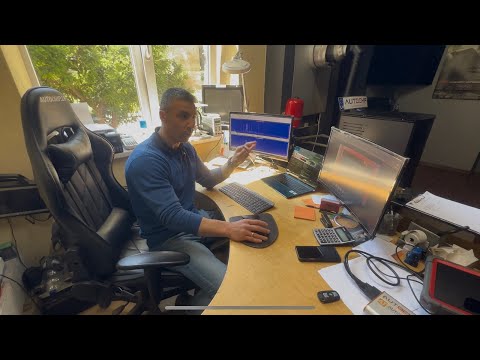
Opel Insignia Delphi E98 — excessive diesel smoke and inspection failure
Opel Insignia with Delphi E98 ECU failed its technical inspection due to excessive smoke opacity. ECU software analysis, calibration correction and repeat testing at AUTOCHIP.
 Opel Insignia
Delphi E98
ECU programming
ECU diagnostics
Diesel smoke opacity
Emissions diagnostics
Technical inspection
Exhaust emissions
ECU software correction

Excessive exhaust smoke is one of the reasons a diesel vehicle may fail its technical inspection. However, high smoke opacity does not necessarily mean that the engine itself is worn out. Incorrect ECU calibration, fuel injection problems, insufficient airflow and defective or missing exhaust aftertreatment components can all contribute to the problem.
At AUTOCHIP, we worked on an Opel Insignia equipped with a Delphi E98 engine control unit. The vehicle had failed its technical inspection because the measured smoke opacity exceeded the permitted value for that particular test. Following an ECU software inspection and calibration correction, repeat measurements produced significantly lower readings.
Why did the Opel Insignia fail its technical inspection?
During the original inspection, the diesel engine produced a reported smoke opacity reading of 1.065. The permissible limit stated for the vehicle was 0.70.
The measured value therefore exceeded the applicable threshold, preventing the vehicle from passing the inspection on that occasion.
Diesel smoke opacity testing evaluates the optical characteristics of the exhaust gases. Elevated readings can indicate increased soot levels associated with incomplete combustion or problems involving the exhaust emissions control system.
However, an excessive smoke reading does not identify a specific mechanical or electronic fault on its own. Proper diagnosis requires consideration of the engine's air supply, fuel injection system, condition of the exhaust aftertreatment equipment and ECU calibration.
Inspecting the Delphi E98 ECU software
After the Opel arrived at AUTOCHIP, our technicians examined the software stored in its Delphi E98 ECU.
The engine control unit manages numerous parameters that influence diesel combustion. These include fuel injection behaviour, torque management and communication with the turbocharger control system.
If the ECU calibration has been modified incorrectly, certain operating conditions may result in a mismatch between the injected fuel quantity and the available air. This can increase soot formation and produce higher exhaust smoke opacity.
For this particular Opel Insignia, we inspected the ECU software file and made calibration corrections. The video does not identify every individual map or parameter that was modified, so the original excessive smoke cannot be attributed to one specific setting with certainty.
Smoke opacity results before and after ECU correction
Following the software changes, additional smoke opacity measurements were carried out. The results were substantially lower than the original inspection reading.
Figures reported in the video:
- Initial smoke opacity reading: 1.065.
- Permissible limit stated for the inspection: 0.70.
- Readings after ECU software correction: approximately 0.23–0.38 during repeat measurements.
The reduction was significant. After the calibration changes, the reported readings were below the threshold stated for the original inspection.
These figures relate specifically to the vehicle and testing conditions shown. The 0.70 threshold should not be treated as a universal limit for all diesel vehicles, since applicable inspection requirements depend on vehicle specifications and the relevant testing rules.
How can fuel injection settings affect diesel smoke?
Diesel combustion depends on the relationship between injected fuel, available oxygen and conditions inside the cylinders. When too much fuel is supplied relative to the available air, combustion can become less effective and soot formation may increase.
Several factors can influence diesel smoke opacity:
- Fuel injection quantity and timing under different engine operating conditions.
- Turbocharger boost pressure and the actual mass of air entering the engine.
- Injector condition and fuel atomisation quality.
- Intake system integrity, including possible air leaks or restrictions.
- Exhaust aftertreatment equipment and its mechanical condition.
- Previous ECU software modifications that may have altered engine operating parameters.
Because these factors interact, correcting excessive smoke requires more than simply reducing a number in the ECU software. The underlying cause must be established, and the relevant mechanical and electronic systems must be operating correctly.
Why was further emissions system repair still necessary?
An important detail in this Opel Insignia case is that the improved smoke opacity readings did not represent a complete restoration of the vehicle's emissions control equipment.
The AUTOCHIP technician explained that the owner would still need to restore the missing or previously altered emissions-related components and update the engine management software accordingly.
The video does not specify the complete list of components requiring replacement or repair. It would therefore be incorrect to claim that a particular DPF, EGR valve or other individual component was definitely replaced or scheduled for replacement.
The owner was advised to use the period before the following annual inspection to complete the necessary repairs. The technician expected the improved smoke opacity readings to address the immediate measurement problem, but the video does not confirm that the vehicle subsequently passed an official repeat inspection.
A lower smoke opacity reading does not prove that all emissions control equipment is present, functioning correctly or compliant with the relevant requirements. Smoke testing evaluates only part of a vehicle's overall emissions performance.
Can excessive diesel smoke always be fixed through ECU software?
This Opel Insignia demonstrates that ECU calibration can have a substantial effect on measured smoke opacity. Nevertheless, software correction is not a universal solution for every diesel smoke problem.
If excessive smoke results from faulty injectors, insufficient boost pressure, intake leaks or damaged exhaust aftertreatment components, the appropriate mechanical or electrical repairs will still be required.
ECU software corrections are most relevant when incorrect calibration settings have been identified or the software needs to be returned to a configuration suitable for the vehicle's properly functioning hardware.
The objective of professional diagnostics should be to establish the real cause of the problem and restore correct engine and emissions system operation, rather than focusing exclusively on obtaining a lower smoke test reading.
Diesel smoke diagnostics and ECU programming at AUTOCHIP
At AUTOCHIP, we provide diesel engine diagnostics, ECU software analysis, inspection of previously modified calibrations and engine management software corrections.
In this case, the Opel Insignia with a Delphi E98 ECU showed a substantial improvement in measured smoke opacity after software correction, with reported readings decreasing from 1.065 to approximately 0.23–0.38.
However, restoring the vehicle's emissions control equipment remained a separate task for the owner.
If your diesel vehicle fails its technical inspection due to excessive smoke, identifying the underlying cause is essential. ECU software analysis can form part of a wider diagnostic process alongside checks of the engine, fuel system, airflow and exhaust aftertreatment equipment.
Watch the accompanying video for a closer look at the Delphi E98 software work and the smoke opacity measurements performed on this Opel Insignia.
Video related to this case
Watch the video for additional details about this job.
Related technical cases