Opel Antara EDC16C39 — how a modified ECU file concealed engine faults
Opel Antara starting problems with no diagnostic trouble codes. AUTOCHIP discovers disabled DTCs, corrects the ECU software and restores fault reporting.
 Opel Antara
Bosch EDC16C39
ECU diagnostics
ECU programming
DTC restoration
Fault code suppression
DPF
EGR
Chip tuning correction
Engine starting problems
Camshaft position sensor
Boost pressure sensor




Imagine a car that occasionally refuses to start, suffers from unstable engine operation or stalls unexpectedly, yet a diagnostic scan reports no fault codes whatsoever. Even more suspiciously, disconnecting a sensor fails to trigger the expected diagnostic trouble code. In situations like this, the problem may not be with the diagnostic scanner or the individual sensor. It could be hidden inside previously modified engine management software.
This is exactly the type of problem we investigated at AUTOCHIP when an Opel Antara equipped with a Bosch EDC16C39 ECU arrived with intermittent engine starting difficulties. Despite the owner's complaints, the initial diagnostic scan showed no stored fault codes.
Starting problems after previous ECU modifications
The Opel had previously undergone ECU software modifications at another workshop. Its DPF and EGR functions had been disabled through software changes, and the engine had also received a performance tune.
After some time, the owner began experiencing intermittent starting problems. On some occasions the engine would start, while at other times it was difficult to get it running.
When the vehicle arrived at AUTOCHIP, diagnostic equipment displayed an empty fault code list. Given the symptoms, this raised the possibility that the previous ECU modifications had affected the engine's built-in diagnostic functions.
How can ECU software hide diagnostic faults?
Engine control units use Diagnostic Trouble Codes (DTCs) to identify and report specific faults associated with sensors, actuators and engine management systems. These codes provide technicians with valuable information about where to begin investigating a problem.
In certain ECUs, software modifications can alter the configuration used to process diagnostic trouble codes. If these modifications are carried out incorrectly, the changes may disable more than just the fault codes associated with a particular system. Important diagnostic functions for unrelated engine components may also be affected.
The result can be an engine with genuine operating problems but no corresponding fault codes available through a diagnostic scanner. This makes troubleshooting considerably harder because technicians lose information that would otherwise help narrow down the possible causes.
Inspecting the Bosch EDC16C39 software
To establish why the Opel Antara was not reporting faults, we examined the software stored in its engine control unit and compared it with original software data.
The comparison revealed that numerous entries in the ECU's diagnostic trouble code table had been disabled during the previous programming work. As a result, the ECU could no longer report a range of engine management faults correctly.
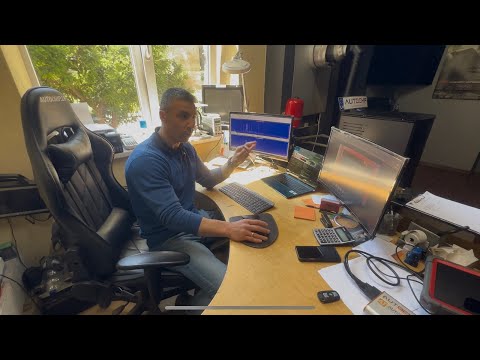
In the accompanying video, the AUTOCHIP technician demonstrates the differences between the modified software and the original reference using a specialised ECU editing application. The comparison makes it possible to see how the diagnostic configuration had been altered.
This illustrates an important aspect of ECU programming: achieving a requested change in engine behaviour is not enough if the modification also compromises the diagnostic functions needed for future maintenance and repairs.
Which faults appeared after restoring DTC reporting?
We revised the ECU software to restore the diagnostic trouble code processing that had been disabled by the earlier calibration. At the same time, the previous DPF and EGR software modifications were corrected while retaining the disabled configuration of those systems, and the earlier performance tune was removed.
Once the revised software had been programmed, the diagnostic scanner began reporting faults that had previously remained hidden. The newly available fault information concerned:
- Boost pressure sensing and the turbocharger pressure control system.
- The camshaft position sensor, where signal-related problems can contribute to difficult engine starting.
- Throttle valve control and associated diagnostic functions.
These diagnostic entries do not automatically prove that every listed component is defective or needs replacing. A fault code identifies a system or circuit requiring further investigation. The underlying cause may involve a sensor, wiring, electrical connections or another related component.
Nevertheless, restoring these codes provided the technicians with useful diagnostic directions. The camshaft position sensor information was particularly relevant because a problem with its signal can affect engine starting.
What was actually repaired?
The most important outcome of this job was the restoration of the Bosch EDC16C39 ECU's diagnostic functionality. Before the software correction, the control unit was concealing fault information. Afterwards, diagnostic equipment could once again report faults associated with the engine management system.
This makes further troubleshooting much more practical. A workshop with suitable diagnostic equipment can now access the available trouble codes, investigate the relevant systems and carry out repairs based on diagnostic evidence rather than guesswork.
However, restoring fault reporting is not the same as repairing every underlying mechanical or electrical problem. The video confirms the software correction and the appearance of previously hidden diagnostic information. It does not establish that all identified faults were subsequently repaired or that the starting issue was completely resolved.
It is also important to distinguish software changes from physical emissions system repairs. Retaining the software-disabled DPF and EGR configuration does not restore the original operation of those systems. The vehicle's compliance with emissions and roadworthiness requirements must be assessed separately.
Why disabling large numbers of fault codes is a serious problem
Poorly executed ECU modifications can create problems that may not become obvious immediately. A vehicle might continue to drive, but when a new fault develops, its diagnostic system may no longer provide the information required to identify the cause.
Disabling large sections of a diagnostic trouble code table without properly understanding their purpose can conceal genuine problems rather than solve them. The absence of a warning light or stored DTC does not necessarily mean that the engine is operating correctly.
Professional ECU programming requires careful attention to diagnostic functionality as well as engine operating parameters. Preserving the ability to detect and investigate future faults is an essential part of maintaining a serviceable vehicle.
ECU diagnostics and software correction at AUTOCHIP
At AUTOCHIP, we provide vehicle diagnostics, ECU programming, assessment of previously modified software and correction of unsuitable engine management calibrations.
If your vehicle develops starting difficulties, unstable operation or other unusual symptoms after ECU tuning, but diagnostic scans show no faults, the engine management software itself may deserve closer inspection.
This Opel Antara demonstrates how an incorrectly modified ECU file can interfere with normal fault diagnosis and why restoring diagnostic functionality can be a crucial step towards identifying the underlying problem.
For a detailed look at the Bosch EDC16C39 software comparison and the restoration of the diagnostic trouble code table, watch the accompanying video.
Video related to this case
Watch the video for additional details about this job.
Related technical cases