2013 BMW F30 330d Stage 1 tuning — almost 300 PS and 652 Nm
2013 BMW F30 330d Stage 1 tuning. ECU calibration following previous DPF and EGR modifications, dynamometer testing and torque reaching 652 Nm.
 BMW F30 330d
Stage 1 chiptuning
ECU programming
Dyno testing
Power and torque measurement
Data logging
DPF system
EGR system
Swirl flaps
Lambda sensors
Downpipe
Limp mode diagnostics
Thermal protection
Engine calibration


The BMW F30 330d with its 3.0-litre diesel engine offers strong performance in standard form. Factory-rated at 190 kW, or 258 metric horsepower (PS), and 560 Nm of torque, it also provides a useful basis for a carefully developed Stage 1 ECU calibration.
However, performance tuning should always begin with an assessment of the vehicle's mechanical condition and engine management system.
A 2013 BMW F30 330d arrived at AUTOCHIP.LV after its owner had carried out extensive changes to the intake and exhaust systems. Several emissions-control components had already been removed, and an aftermarket downpipe had been installed.
Despite the mechanical work, the vehicle was not performing as expected. The ECU was reporting faults associated with the modified configuration, and engine performance was being restricted.
We examined the vehicle, revised the engine management software for its existing configuration, developed a Stage 1 calibration and tested the results on the dynamometer. One of the demonstrated runs produced almost 300 PS and 652 Nm. A subsequent run showed slightly lower figures, with the engine's temperature-related protection functions remaining active.
BMW F30 330d — factory-rated at 258 PS and 560 Nm
This vehicle uses the 190 kW version of BMW's 3.0-litre diesel engine, rated at 258 PS and 560 Nm.
Factory figures provide a useful reference, but they should not be confused with an individual vehicle's measured dynamometer output.
Actual results depend on engine condition, ECU software, operating conditions and the testing procedure.
In this case, evaluating the original performance was complicated by the vehicle's existing modifications and active engine management restrictions.
What had the owner modified before visiting AUTOCHIP.LV?
The BMW had already undergone extensive mechanical changes before arriving at our workshop.
According to the owner and the components visible during the inspection, the changes involved:
- Diesel particulate filter (DPF): the filter had been removed.
- Exhaust gas recirculation (EGR): the associated equipment had been removed.
- Intake manifold swirl flaps: the original configuration had been altered.
- Lambda sensors: changes had been made to the sensors or associated control functions.
- Exhaust system: a downpipe had been installed as part of a less restrictive exhaust arrangement.
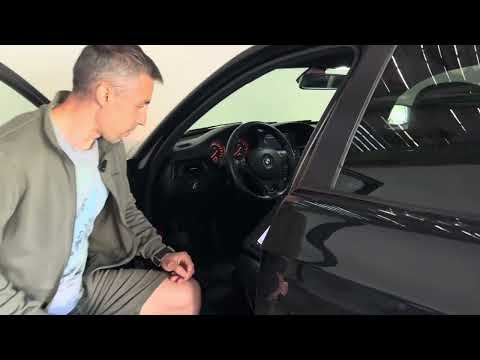
During the engine bay inspection, the technician showed the modified connections, blanking components, gaskets and pipework. He commented positively on the quality of the mechanical installation.
It is important to distinguish this earlier work from what AUTOCHIP.LV carried out. The emissions-related hardware modifications had already been completed by the owner before the vehicle arrived.
Removing a DPF, catalytic converter or other emissions-control equipment can make a vehicle non-compliant with roadworthiness and emissions regulations applicable to public-road use. ECU software changes do not restore the original exhaust aftertreatment performance.
Why was the BMW suffering from reduced power?
One of the problems involved a mismatch between the vehicle's modified hardware configuration and the engine control software.
When components monitored by the ECU are removed or altered, the control unit may register diagnostic trouble codes. Depending on the faults and the engine management strategy, the system may also restrict torque and enter a reduced-power operating mode, commonly known as limp mode.
The initial dynamometer run was performed with the original ECU calibration, but the vehicle was already reporting faults related to the altered emissions equipment.
These faults and the associated restrictions prevented the engine from delivering its normal performance.
Consequently, the initial dyno curve should not be interpreted as a valid factory baseline for a mechanically standard, fault-free BMW 330d.
The case illustrates why existing modifications and the reasons for restricted engine operation must be understood before attempting to increase power.
ECU programming and Stage 1 calibration
After examining the vehicle, we revised the engine management software.
The programming work included changes to control functions associated with the previously removed DPF, EGR equipment, swirl flaps and lambda sensors. Related diagnostic fault handling and limp-mode activation logic were also modified.
Alongside these changes, we developed a Stage 1 performance calibration intended to increase engine power and torque.
These are two technically different aspects of ECU programming. One involves adapting the software to the vehicle's already modified hardware configuration; the other concerns engine performance calibration.
It is also important to understand that altering diagnostic fault handling or limp-mode behaviour does not repair genuine mechanical problems.
If an engine has an underlying fault, that problem still requires appropriate diagnosis and repair, regardless of the ECU software configuration.
First tuned dyno result: almost 300 PS and 652 Nm
Following the ECU software work, the BMW underwent further dynamometer testing.
One demonstrated run produced:
- Power: almost 300 PS.
- Torque: 652 Nm.
For comparison, the factory specification is 258 PS and 560 Nm.
The measured torque was therefore 92 Nm above the factory-rated value.
However, that difference should not be presented as the precise gain over a verified, healthy factory baseline. The vehicle had been operating with engine management faults and reduced-power restrictions before programming.
The factory specification is therefore a reference point rather than a substitute for a comparable baseline measurement.
The dynamometer curves nevertheless showed a substantial change between the initial restricted operating condition and the result achieved after ECU calibration.
Repeat dyno test: approximately 292 PS and 635 Nm
We then carried out another dynamometer run to examine the vehicle's performance under repeated load.
This test produced slightly lower figures:
- Power: approximately 292 PS.
- Torque: 635 Nm.
The technician attributed the difference to the temperature-related protection and compensation functions retained in the engine calibration.
During repeated high-load testing, engine oil, coolant and intake air temperatures may change. Under certain conditions, the ECU can reduce the permitted engine load, resulting in slightly lower peak output.
A reduction between consecutive tests does not necessarily indicate a new mechanical fault. It can also reflect the operation of protective strategies as the engine's thermal conditions change.
Why were the temperature protection limits retained?
Increasing diesel engine output also increases the importance of controlling operating temperatures and engine load.
For this BMW, the calibration retained protection functions associated with engine oil temperature, coolant temperature and air temperature.
During prolonged high-load operation, the ECU may reduce requested torque or otherwise adjust engine output when relevant operating conditions are reached.
For example, sustained high-speed driving or repeated hard acceleration can increase temperatures in several engine systems. Under those conditions, the engine management software may temporarily reduce output.
When temperatures return to a more favourable range, greater performance may become available again.
Retaining these protective strategies is a sensible precaution, although it does not guarantee that increased engine output will have no effect on mechanical stresses or long-term durability.
In this project, the temperature-related limits were not simply disabled to obtain identical peak figures on every dyno run.
Almost 300 PS without obvious black smoke
Another observation during the dynamometer testing concerned visible exhaust smoke.
Despite the higher engine output and the absence of the original DPF, the technician reported that there was very little visible black smoke during the demonstrated runs. A small amount of greyish exhaust was visible at times.
On a diesel engine, visible soot formation is influenced by the relationship between injected fuel quantity and the air available for combustion.
However, low visible smoke should not be confused with low particulate emissions.
Because the DPF had previously been removed, the vehicle could still produce substantial particulate emissions even when the exhaust appeared relatively clear.
No independent smoke opacity or particle number measurement was presented in the video, so emissions compliance cannot be inferred from the visual demonstration.
Data logging and calibration verification
Alongside the dynamometer measurements, we also recorded engine operating data through data logging.
Live diagnostic information complements dyno results by helping technicians examine how the engine management system behaves under load.
Torque management, temperature-related parameters and operating limits are particularly relevant when evaluating repeated power measurements.
For this BMW, the dyno curves and diagnostic logs were used to assess the calibration after the software changes.
However, the video does not provide a complete numerical record of every sensor value. It would therefore be inappropriate to claim that every engine system was independently verified under every possible operating condition.
What did the work cost?
The work carried out on this BMW F30 330d included assessing its existing configuration, adapting the ECU software, developing the Stage 1 calibration, recording diagnostic data and completing dynamometer tests.
The technician stated that the total price for this particular job was €300 including VAT.
The owner had already performed the mechanical removal of the emissions-control equipment before visiting the workshop.
The quoted amount therefore relates to the specific ECU and diagnostic work demonstrated, not a fixed price for every BMW 330d or every similarly modified vehicle.
BMW 330d ECU diagnostics and tuning at AUTOCHIP.LV
This BMW F30 case demonstrates why professional ECU tuning should begin with an assessment of the vehicle's actual condition.
If the engine is operating in limp mode, reporting faults or has undergone previous hardware changes, the cause of its restricted performance needs to be understood before the final calibration can be properly evaluated.
At AUTOCHIP.LV, we provide BMW diesel engine diagnostics, ECU software analysis, individual engine calibration and dynamometer testing.
If your BMW 330d is suffering from reduced performance, unexpected engine limitations or disappointing results from previous tuning, a comprehensive diagnostic assessment is a useful starting point.
The accompanying video shows the BMW F30 330d's existing mechanical modifications, ECU programming results and repeated dynamometer tests.
Video related to this case
Watch the video for additional details about this job.
Related technical cases