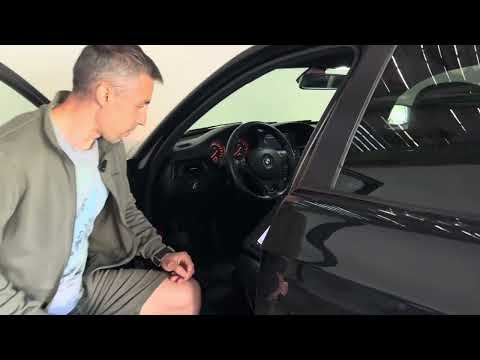
BMW E39 530d — Custom M57 ECU Tuning with Upgraded Turbo and Fuel System
Custom BMW E39 530d M57 tuning with a Bosch EDC15C4 ECU, CP3 R90 fuel pump, upgraded turbocharger, MAP sensor calibration, dyno testing and data logging.
 ECU remapping
Bosch EDC15C4
BMW M57
Custom tuning
Dyno testing
Data logging
CP3 R90 fuel pump
Fuel system upgrade
Turbocharger upgrade
MAP sensor calibration
Boost pressure
Common Rail
Intercooler
Popcorn limiter



How much additional torque can a BMW E39 530d produce when its engine has already received substantial hardware upgrades? This AUTOCHIP.LV project demonstrates why tuning a modified diesel involves much more than uploading a generic remap. To make effective use of a larger turbocharger and upgraded fuel delivery components, the ECU calibration must be matched to the hardware and verified through testing.
The vehicle was a BMW E39 530d equipped with the 3.0-litre M57 diesel engine, originally rated at 142 kW. It arrived with an existing ECU remap, but the owner had also made several modifications to the fuel system, turbocharger and associated components.
Following calibration work and dynamometer testing, the engine produced approximately 253 HP. The video also highlights a substantial torque improvement, described as roughly 300 Nm above the standard engine's output. This was a modified vehicle, so the result should not be confused with the gains expected from a conventional Stage 1 remap on factory hardware.
What Had Already Been Upgraded on This BMW M57?
Before visiting AutoChip, the owner had invested in several upgrades intended to improve the engine's performance potential.
The modifications discussed in the video included:
- CP3 R90 high-pressure fuel pump — a pump configuration sourced from a BMW X5.
- Upgraded low-pressure fuel supply — incorporating a pump operating at approximately 6 bar.
- 4-bar MAP sensor — fitted to provide a wider absolute intake pressure measurement range.
- Upgraded turbocharger — described by the owner as a unit from a 160 kW engine version.
- Turbo Systems pipework — new components fitted to the air delivery system.
- Straight-through exhaust system — already installed before the tuning session.
The owner also discussed plans to install a larger intercooler. However, the original intercooler was still fitted during the recorded tests. The larger unit had not yet been installed.
This distinction matters because the demonstrated performance was achieved with the upgraded turbocharger and fuel system but without the planned intercooler replacement.
Why Does the CP3 R90 Fuel Pump Matter?
The BMW M57 uses a Common Rail diesel injection system. Its high-pressure pump supplies fuel to the rail, from which the injectors deliver precisely controlled quantities to the engine cylinders.
As engine torque and power increase, the demand for fuel delivery also grows. The high-pressure pump must maintain suitable rail pressure while the low-pressure supply system provides enough fuel to support it.
The CP3 R90 is used in performance-oriented M57 configurations because it offers greater delivery capacity than certain original pump versions.
However, a higher-capacity pump does not automatically produce more engine power. Its performance must be supported by adequate low-pressure fuel supply, correct injection control and suitable ECU calibration.
For this BMW, fuel system monitoring formed an important part of the tuning process. If actual rail pressure falls below the requested level under load, increasing the fuel demand further may cause performance problems or trigger ECU protection strategies.
Checking the Previous Remap and Fixing a Sensor Connection
The BMW arrived at AutoChip with an existing performance calibration. Before replacing it, the team examined the previous software and carried out baseline measurements.
An initial torque reading of approximately 341 Nm was mentioned during the assessment. Given the vehicle's upgraded hardware, the existing calibration and engine management behaviour required closer investigation.
The technicians also identified an issue with a sensor connection. The contact was cleaned, the connector was correctly seated and the connection was secured.
Reliable sensor data is essential when calibrating a modified engine. An unstable connection can interfere with the ECU's interpretation of operating conditions and make accurate tuning difficult.
Once the connection had been addressed, the team proceeded to revise the Bosch EDC15C4 calibration for the vehicle's installed hardware.
Calibrating the 4-Bar MAP Sensor and Turbo Boost
One of the key areas of the work was intake pressure measurement and control.
A MAP sensor measures absolute pressure in the intake system. If the original sensor is replaced by one with a different measuring range, the ECU must be calibrated to interpret its output correctly. Otherwise, the engine management system may calculate incorrect pressure values.
This BMW had a 4-bar MAP sensor fitted, making appropriate software scaling an essential part of the custom calibration.
During subsequent testing, the technicians examined both requested and actual turbo boost pressure. The video mentions actual readings of approximately 1.5–1.6 bar, compared with a requested boost level of around 1.8 bar.
Such readings need to be interpreted in relation to engine speed, load and the conditions in which they were recorded. The difference should not automatically be treated as a fault, but it demonstrates why real boost performance must be checked rather than assuming the turbocharger always achieves the requested target.
It is also important to distinguish absolute pressure from gauge boost pressure. Diagnostic software may display absolute pressure in millibars, including atmospheric pressure. The reference point and units must be considered before comparing values.
Custom Bosch EDC15C4 Calibration and Dyno Testing
Unlike a standard remap for an unmodified BMW 530d, this project required an ECU calibration tailored to the combination of turbocharger, fuel pump, boost pressure sensor and intake components already installed.
After revising the Bosch EDC15C4 software, the team tested the vehicle on the dynamometer and compared its performance with the previous calibration.
In the video, the blue curve represents the earlier tune, while the red curve shows the result after AutoChip's calibration work. The technician highlights the substantial improvement in the engine's torque delivery and overall response.
The revised configuration was reported to produce approximately 253 HP. The project description also emphasises an increase of around 300 Nm in torque compared with the standard engine.
These figures need to be viewed in the context of the existing hardware upgrades. The result was not achieved through software changes alone on an otherwise standard engine. Instead, the calibration was adapted to make the various modified components work together more effectively.
Why Data Logging Is Essential on a Modified Diesel
A dynamometer graph shows the power and torque delivered, but it does not provide a complete picture of how a modified engine behaves.
For that reason, the BMW was also tested on the road, with ECU operating parameters recorded during driving.
The data logs included intake air temperature, engine speed, actual and requested turbo boost, mass airflow readings, fuel delivery parameters and Common Rail pressure.
These measurements help reveal whether the turbocharger and fuel system are supporting the requested performance and whether any important operating parameter requires further attention.
After the tests, the technician reported that the fuel pumps were maintaining performance and that the car was responding well. A small reduction in power was also observed as temperatures changed during repeated testing.
This is particularly relevant because the vehicle still had its factory intercooler. Higher boost and sustained engine load increase the demand for effective charge-air cooling. An upgraded intercooler may help manage intake temperatures, but its benefit had not yet been measured on this vehicle because it was still a planned modification.
Popcorn Limiter — An Additional Sound Feature
Alongside the performance calibration, the team configured a feature commonly known as a popcorn limiter.
This is a particular rev-limiter strategy that can produce distinctive, sharp exhaust pulses under certain operating conditions. The video includes a demonstration of the resulting sound.
A popcorn limiter is separate from the engine's power calibration and is not necessary to achieve increased horsepower or torque.
Depending on how such a feature is implemented, it may introduce additional mechanical or thermal stress. It should therefore be considered an optional sound-related modification rather than a universal performance upgrade.
Final Result: A BMW E39 Tuned for Its Actual Hardware
This BMW E39 530d illustrates the difference between a conventional ECU remap and a custom calibration for a significantly modified diesel engine.
The owner had already fitted a CP3 R90 high-pressure pump, upgraded the low-pressure fuel supply, changed the turbocharger, installed a 4-bar MAP sensor and modified the intake pipework. AutoChip's task was to make the engine management software work appropriately with those components.
The workshop checked the previous calibration, corrected a sensor connection, revised the Bosch EDC15C4 software and verified the results through dynamometer testing and road data logging.
The recorded project describes an output of approximately 253 HP and a torque improvement characterised as around 300 Nm above the standard engine level. The larger intercooler remained a future upgrade rather than a modification completed during this visit.
At AUTOCHIP.LV in Riga, we provide custom ECU calibration, diagnostics for modified diesel engines, data logging and dynamometer testing. The accompanying video shows the BMW E39's hardware configuration, dyno comparisons and engine operating data in greater detail.
Video related to this case
Watch the video for additional details about this job.
Related technical cases