2010 Audi Q5 — DPF Removal, Catalytic Converter Retained and Stage 1 Preparation
2010 Audi Q5 DPF removal with the catalytic converter retained. Exhaust housing fabrication and preparation for Bosch EDC17CP14 ECU programming and Stage 1.
 DPF removal
EGR
Stage 1
Bosch EDC17CP14
ECU programming
Exhaust system modification
Catalytic converter
Diesel diagnostics



The diesel particulate filter (DPF) is an important part of a modern diesel vehicle's emissions control system. However, as vehicles accumulate mileage, DPF-related faults can become a significant maintenance concern. Frequent regeneration cycles, warning messages, excessive exhaust backpressure and reduced engine performance are among the symptoms that may require investigation.
This AUTOCHIP.LV project involved a 2010 Audi Q5 diesel equipped with a Bosch EDC17CP14 engine control unit. The work focused on mechanically removing the DPF filter element while retaining the catalytic converter, finishing the exhaust housing and preparing the vehicle for further ECU software modifications.
The video documents the mechanical work already carried out and explains the next planned stages, including DPF and EGR software changes and a Stage 1 ECU calibration.
Why Do Diesel Particulate Filters Develop Problems?
A diesel particulate filter captures soot particles produced during combustion. Under suitable operating conditions, the engine management system initiates regeneration, raising exhaust temperatures to oxidise accumulated soot.
Over time, however, non-combustible ash also builds up inside the filter. Normal regeneration cannot remove this material, and additional problems can develop if regeneration cycles are repeatedly interrupted or the engine is not operating correctly.
Short journeys, insufficient exhaust temperatures, sensor faults, injection problems and other engine-related issues can all contribute to DPF difficulties. Excessive restriction can increase exhaust backpressure and affect engine operation.
The appropriate repair depends on the underlying cause and the condition of the filter. Possible solutions include diagnosing and repairing related engine faults, professional DPF cleaning or replacing the filter when necessary.
For this particular Audi Q5, mechanical removal of the DPF element was selected. The video does not provide the original diagnostic fault codes, differential pressure measurements or other detailed findings, so the exact initial cause of the DPF issue cannot be established from the footage.
Accessing the DPF on the Audi Q5
One of the challenges of exhaust system work is access. Depending on the vehicle's design, removing a DPF assembly may require partial disassembly of surrounding components before the housing can be reached.
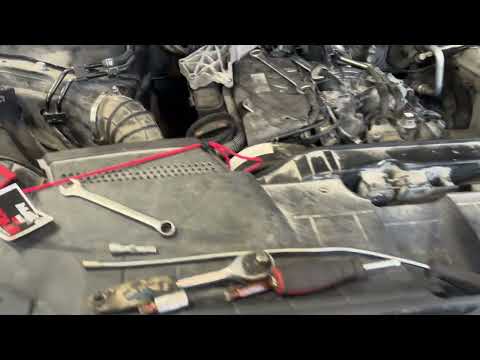
At the beginning of the video, the technician demonstrates the amount of disassembly required to access the relevant exhaust component on this Audi Q5.
This illustrates why DPF work can involve considerably more labour than simply removing a filter. Preparing access, protecting surrounding components and correctly reassembling the vehicle are all important parts of the process.
During the documented work, the DPF filter element was removed from the exhaust assembly, while the catalytic converter was retained.
Why Was the Catalytic Converter Kept?
The DPF and catalytic converter serve different purposes, even when they are installed close together or incorporated into a combined exhaust assembly.
The DPF primarily captures particulate matter, while a diesel oxidation catalyst helps convert certain exhaust pollutants, particularly carbon monoxide and unburned hydrocarbons, into less harmful compounds.
In this project, the technician specifically demonstrated that the catalytic converter remained in place after the DPF element had been removed.
Understanding the construction of the exhaust assembly is important when working with components that perform different emissions control functions.
It should also be understood that retaining the catalytic converter does not preserve the original particulate filtration performance. Without a functioning DPF, the exhaust system no longer provides the factory particulate removal capability, even if the oxidation catalyst is still present.
Welding and Finishing the Exhaust Housing
After the filter element had been removed, the exhaust housing underwent fabrication and finishing work. Particular attention was given to the appearance of the welded areas.
The technician shows the finished housing, highlighting how the welds had been carefully ground and smoothed. The treated areas were visually difficult to distinguish from the surrounding metal surface.
Careful finishing demonstrates attention to the mechanical workmanship. However, the appearance of a weld alone does not confirm its sealing performance, structural strength or long-term resistance to heat cycling. Those properties require appropriate inspection.
By the time the footage was recorded, the housing fabrication and finishing had been completed. Reinstalling the assembly in the vehicle was the next planned step.
Bosch EDC17CP14 ECU Programming and Planned Stage 1
The exhaust system work formed only one part of the overall plan. The next stage involved modifying the software of the Bosch EDC17CP14 engine control unit.
The technician described plans to disable DPF-related functions in the ECU, modify EGR control and carry out Stage 1 tuning.
Stage 1 typically involves optimising the engine management calibration to increase power and torque without major mechanical changes to the engine. The achievable output depends on the engine variant, its condition and the calibration strategy used.
During filming, the ECU software file was being prepared for further work, and reprogramming was described as an upcoming operation. Therefore, the footage does not establish that Stage 1 calibration or DPF/EGR software deactivation had already been completed and verified.
It is also important to note that disabling DPF and EGR functions changes the vehicle's original emissions control configuration. Such modifications may not comply with emissions legislation or roadworthiness requirements for vehicles used on public roads.
EGR Seals and Planned Reassembly
The technician also mentioned fitting seals associated with the EGR valve during reassembly.
Correct sealing is important around exhaust gas recirculation components because these connections operate under significant thermal and mechanical stress. Appropriate gaskets and properly secured connections help prevent leaks and related operating problems.
At this point in the project, the planned sequence was to fit the necessary seals, reinstall the prepared exhaust assembly and then continue with ECU programming.
The distinction between completed and planned work matters here. The video confirms that the DPF element had been removed, the catalytic converter retained and the exhaust housing finished. It does not document the completion of every subsequent reassembly and software operation.
What Should Be Checked After Exhaust and ECU Work?
Following exhaust system modifications, the relevant connections should be checked for correct installation and exhaust leakage. Engine operation and any diagnostic faults should also be assessed.
When ECU programming is involved, additional verification of engine operating parameters is important. If a Stage 1 calibration is planned, the engine's condition and its response under load should be evaluated separately.
The available footage does not show the final post-assembly inspection or the outcome of subsequent ECU testing. No before-and-after power measurements are provided, so it would be incorrect to claim a specific horsepower or torque increase for this vehicle.
Summary of the Audi Q5 Work
For this 2010 Audi Q5, the documented work included removing the DPF filter element, retaining the catalytic converter and completing the welding and finishing of the exhaust housing.
Reassembly, EGR sealing work and Bosch EDC17CP14 software programming — including the intended DPF/EGR modifications and Stage 1 calibration — were described as the next steps. Their completion and final test results were not confirmed in the video.
This project illustrates the range of technical tasks that may be involved in exhaust system work: accessing difficult-to-reach components, metal fabrication, sealing and reassembly, as well as ECU software management.
At AUTOCHIP.LV in Riga, we provide diesel engine diagnostics, ECU software assessment and calibration, and investigation of DPF and EGR system problems. When emissions-related faults occur, identifying the underlying cause and selecting a technically appropriate, legally compliant solution is essential.
The accompanying video provides a closer look at the Audi Q5 disassembly, the retained catalytic converter and the finishing work performed on the exhaust housing.
Video related to this case
Watch the video for additional details about this job.
Related technical cases