BMW 325d Deep Idle — Deeper Diesel Sound and 714 Nm of Torque
BMW 325d Deep Idle and Popcorn tuning with ECU calibration improvements. Torque increased from 675 to 714 Nm, with previous Check Engine warnings addressed.
 BMW 325d
Deep Idle
Diesel sound tuning
Popcorn
ECU programming
ECU remapping
Check Engine diagnostics
DPF
EGR
Dyno testing
Torque optimisation


A diesel BMW does not have to be defined solely by its horsepower. For some owners, the sound and character of the engine are just as important. One way of changing that character is Deep Idle, an ECU software calibration designed to produce a deeper, more distinctive engine note at idle.
At AUTOCHIP.LV in Riga, we worked on a BMW 325d that had already been remapped. The project involved introducing Deep Idle, adding a Popcorn sound effect, refining the existing engine calibration and addressing a Check Engine warning that had previously appeared during hard acceleration.
Following the software changes, the vehicle recorded 714 Nm of torque compared with 675 Nm on its previous calibration. Peak power remained practically unchanged at approximately 270 hp.
What is Deep Idle on a diesel BMW?
Deep Idle is a form of sound-focused engine calibration that changes the way an engine runs and sounds at idle. The objective is to create a deeper and more pronounced engine note rather than simply increase maximum power.
Diesel engine sound depends on several factors, including engine design, combustion behaviour, injection characteristics, idle speed and exhaust configuration.
Because engine management systems differ, the available Deep Idle effect also varies between vehicles. A calibration that produces a noticeable change on one BMW may not deliver the same sound on another engine.
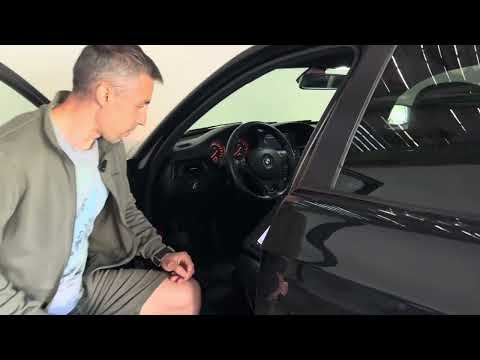
In the video, the technician first demonstrates the vehicle's sound before activating Deep Idle. The engine is then shown running with the new calibration.
The difference is particularly noticeable at idle. The engine develops a deeper, more rhythmic note that the technician compares with the sound of a much larger engine.
He also explains that the effect is considerably more pronounced in person than through a phone recording. Even from another part of the building, the engine reportedly sounds noticeably different.
Deep Idle is primarily a sound modification, not a horsepower upgrade. Any measured change in power or torque must be considered separately from the idle sound calibration.
Popcorn tuning — an additional sound effect
The BMW also received a Popcorn sound calibration, adding a distinctive series of exhaust-related sound pulses under certain operating conditions.
In tuning terminology, Popcorn commonly refers to a repeated, staccato sound effect. However, the precise way it is produced depends on the engine and its electronic management strategy.
Diesel sound tuning should not automatically be equated with petrol-engine Pop & Bang calibrations. Although the acoustic results can share similarities, the underlying control methods are not necessarily the same.
On this BMW, Deep Idle provides a more pronounced sound at idle, while Popcorn adds another element to the vehicle's overall character.
Sound-focused engine modifications also require care. Aggressive operating strategies can increase stress on certain components, and changes to exhaust noise or emissions may be restricted under applicable road-use regulations.
Check Engine warning during hard acceleration
Before the AUTOCHIP.LV software revisions, the BMW had another issue unrelated to the desired sound.
When the driver pressed the accelerator hard, the Check Engine warning light would sometimes illuminate. However, the technician explains that the engine did not noticeably lose power when the warning appeared.
This is possible because an ECU can detect an operating parameter outside its expected range without necessarily applying a severe torque limitation or entering an obvious limp mode.
The demonstration refers to previous diagnostic issues associated with emissions-related functions, including DPF and EGR, as well as pressure-related parameters. Exact diagnostic trouble codes are not provided.
AUTOCHIP.LV reviewed and revised the existing ECU calibration. After the changes, the technician reported that the previously observed Check Engine warning no longer appeared during the tested acceleration conditions and that the vehicle continued to deliver power without a noticeable reduction.
However, no detailed post-repair diagnostic logs or component replacement records are provided. The demonstration therefore does not establish that every possible underlying mechanical or electronic issue has been permanently resolved.
ECU calibration results — more torque, almost identical horsepower
This BMW was not running its original factory calibration when it arrived. It already had performance tuning software, which served as the starting point for the comparison.
With the previous remap, the dynamometer showed 271 hp and 675 Nm. Following the AUTOCHIP.LV software revision, the recorded figures were 270 hp and 714 Nm.
| Measurement | Previous remap | AUTOCHIP.LV calibration | Difference |
|---|---|---|---|
| Power | 271 hp | 270 hp | −1 hp |
| Torque | 675 Nm | 714 Nm | +39 Nm |
The technician describes the torque improvement as roughly 30 Nm. Using the specific peak readings quoted in the demonstration, the numerical difference is 39 Nm.
Peak horsepower was essentially unchanged. A one-horsepower difference between separate dyno measurements is too small on its own to establish a meaningful reduction in engine performance.
The more significant result was the higher peak torque figure.
Power and torque are related, but their peak values usually occur at different engine speeds. It is therefore possible for an ECU calibration to increase peak torque without producing a corresponding increase in maximum horsepower.
The complete torque and power curves provide more information about how the engine's characteristics have changed across its operating range.
It would also be incorrect to attribute the additional torque solely to Deep Idle. The workshop revised the wider ECU calibration as part of the project.
Understanding the blue and red dyno curves
The video includes a dynamometer graph comparing the BMW's previous tuning software with the updated calibration.
The blue curve represents the vehicle's earlier remapped configuration. The red curve shows the results after the AUTOCHIP.LV modifications.
This distinction matters because the blue curve does not represent an untouched factory ECU file. Both measurements relate to configurations that had already been modified from standard.
The technician also mentions a quoted original engine output of approximately 197 hp. However, the exact engine version and factory torque specification are not established reliably enough in the demonstration to use them as the basis for calculating a complete factory-to-tuned gain.
The most reliable comparison for this project is therefore between the two measured remapped configurations: 271 hp and 675 Nm before the revision, and 270 hp and 714 Nm afterwards.
Is 714 Nm suitable for everyday driving?
A peak torque figure of 714 Nm represents a substantial load for a passenger-car drivetrain.
When evaluating this type of calibration, it is important to consider the transmission's torque capacity, clutch or torque converter condition, drivetrain components, boost control and fuel delivery performance.
The technician explains that, in his assessment, achieving a significantly higher output from this BMW would require more substantial mechanical changes. He considers the demonstrated result already strong for the vehicle's configuration.
However, the video does not include long-term durability testing or a detailed assessment of transmission loading. The dyno results should not therefore be interpreted as proof of unrestricted mechanical reliability.
Black exhaust smoke is also visible during hard acceleration in the demonstration. This should not be considered an indicator of tuning quality. Excessive soot production may warrant further evaluation of combustion conditions, air supply, fuel delivery and emissions control operation.
BMW Deep Idle — final results
The completed work included Deep Idle, a Popcorn sound effect and revisions to the BMW's existing ECU software. The technician also reported that the previous Check Engine warning no longer appeared during the tested conditions.
The final dynamometer figures were 270 hp and 714 Nm, compared with 271 hp and 675 Nm on the previous calibration. The main measured improvement was higher peak torque, while the most immediately noticeable change was the deeper engine sound at idle.
AUTOCHIP.LV provides engine diagnostics, ECU programming, chip tuning and dynamometer testing in Riga. The tuning options available for a particular BMW depend on its engine, control software and mechanical condition.
The accompanying video lets viewers compare the original idle sound with the Deep Idle result, hear the Popcorn effect and examine the before-and-after power and torque graphs.
Video related to this case
Watch the video for additional details about this job.
Related technical cases