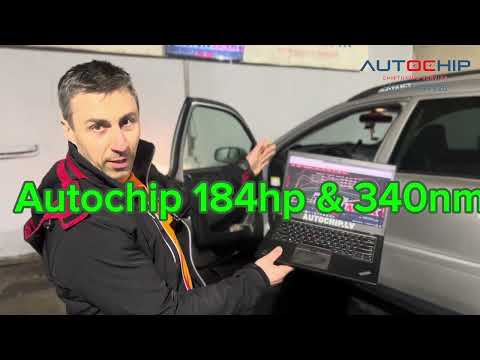
€300 Power Box Tested on a Dyno — Is the Power Gain Worth It?
Does a €300 Power Box really work? AUTOCHIP.LV dyno test reveals +18 hp and +8 Nm. Comparing a plug-in tuning box with professional ECU remapping.
 Power Box
Chip Box
Chip tuning
ECU remapping
Dyno testing
Power measurement
Torque measurement
Engine diagnostics
Data logging

Can a small electronic box connected to a few engine sensors really increase horsepower? Plug-in tuning modules often promise an easy performance upgrade without modifying the factory ECU software. But how much extra power do they actually deliver, and is the improvement worth the price?
At AUTOCHIP.LV, we decided to put one to the test. A customer purchased a Power Box costing approximately €300, and we installed it on the vehicle before carrying out comparative measurements on our dynamometer. The goal was simple: measure the difference in horsepower and torque between the original engine configuration and the same car running with the external tuning module activated.
What is a Power Box and how does it work?
A Power Box, sometimes called a Chip Box or tuning box, is an additional electronic module connected to the vehicle's engine management system.
Depending on its design, it may modify selected sensor signals or influence the information received by the engine control unit (ECU). This can change how the ECU calculates certain operating parameters and potentially increase engine output.
The important distinction is that a Power Box normally does not rewrite the factory ECU software. Professional ECU remapping, by comparison, involves modifying the engine's internal calibration. Depending on the engine, this may include fuel delivery, ignition timing, torque limits, boost control and other related parameters.
An external tuning box uses a different approach. Instead of directly adjusting the ECU calibration, it interacts with the existing engine management system through a limited number of electrical connections.
Why are tuning boxes used on newer vehicles?
One reason owners consider external tuning modules is the increased software protection found in some modern engine control units.
Certain Bosch ECUs, particularly those fitted to newer vehicles, use security mechanisms that restrict access to reading or modifying the software. Popular tuning tools do not necessarily support every ECU and software version, especially when new protection methods are introduced.
However, this does not mean that every vehicle manufactured after 2020 is impossible to remap. Programming support depends on the exact ECU, software version and available unlocking or programming procedures. Some units can already be accessed, while others may require solutions that are not yet available.
For vehicles where direct ECU programming is currently restricted, a plug-in Power Box may appear to offer a convenient alternative. The question is whether that convenience comes with acceptable performance and engine management control.
Installing the Chip Box: three connections and six settings
The vehicle used in this test had a petrol engine and a manual transmission. Its exact model and engine specification were not identified in the demonstration.
The customer's Power Box connected to several parts of the engine sensor circuitry. Three connection points were described during installation, including connections associated with intake air and engine speed signals.
The supplied connectors allowed the system to be switched between the original wiring configuration and the external module without removing the entire installed harness.
The device offered six adjustable settings. At the customer's request, we selected the highest setting, level six, to investigate the maximum performance benefit available from this particular module under the test conditions.
These six settings should not be confused with six professional tuning stages. They are simply adjustment levels provided by the external device.
First dyno run — measuring the standard engine
Before activating the Power Box, we measured the vehicle with its original engine management configuration. The dyno run was carried out in fourth gear, while diagnostic parameters were monitored and data logs recorded for comparison.
According to the manufacturer's figures quoted during the test, the engine was rated at approximately 110 hp and 200 Nm of torque.
The initial dynamometer measurement showed:
- Power: approximately 104 hp.
- Torque: approximately 214–215 Nm.
During the baseline run, the measured power curve began to fall as engine speed increased. The operator stopped the run at approximately 5,000 rpm rather than continuing to the upper end of the engine's operating range, since power was already declining.
As a result, the baseline measurement did not cover the complete engine speed range. This limitation should be kept in mind when interpreting the comparison.
Measured dyno figures can also differ from manufacturer ratings due to vehicle condition, testing methods and operating conditions. The purpose of this experiment was not to establish why the measured figures differed from the quoted specifications, but to compare performance before and after activating the tuning module.
Second dyno run — Power Box set to maximum
After completing the baseline measurement, we activated the external module and selected its highest adjustment level, setting six. The vehicle was then tested again on the dynamometer while engine operating parameters were recorded.
During the run, the engine appeared slightly more responsive and seemed to continue pulling more strongly at certain engine speeds. However, subjective impressions are not a substitute for measured performance.
The dyno revealed the following gains with the Power Box activated:
- Power increase: +18 hp.
- Torque increase: +8 Nm.
- Module setting: level 6 of 6.
- Device price: approximately €300.
These results confirmed that the module produced a measurable performance change. An additional 18 horsepower is not insignificant, but the increase in peak torque was relatively modest at just 8 Nm.
It is also important to remember that peak horsepower and peak torque normally occur at different engine speeds. The two gains therefore need to be considered alongside the shape of the power and torque curves rather than interpreted as improvements measured at one identical operating point.
Does extra horsepower mean the engine is running safely?
One of the main concerns raised during the test was how effectively an external module with only a few connections could manage the engine's operating conditions.
On a petrol engine, the relationship between air and fuel delivery, ignition timing, combustion temperatures and knock control is especially important. Increasing engine output without appropriate control of these factors can potentially increase mechanical and thermal stress.
Air-fuel ratio is a particular concern. Under certain operating conditions, an excessively lean mixture can contribute to elevated temperatures and increase the risk of engine damage.
However, the number of sensor connections alone does not prove that a tuning box causes a lean mixture. The factory ECU continues to operate its own control strategies, and the actual effect depends on how the specific module modifies the relevant signals.
A reliable assessment would require detailed measurements of air-fuel ratio, lambda control, fuel trims, ignition behaviour, temperatures and other relevant parameters. Although diagnostic data logging was performed during the test, the demonstration does not provide enough numerical information to establish a specific mixture problem or confirm long-term engine safety.
Therefore, a measured power increase should not be treated as proof that the complete engine calibration is suitable for sustained use.
Power Box versus professional ECU remapping
The biggest advantage of a plug-in tuning box is convenience. Installation is generally straightforward compared with direct ECU programming, and the module can be removed to restore the original wiring configuration.
Professional ECU remapping offers a different level of control. Rather than influencing selected sensor inputs, a technician can adjust the available engine management maps and related limits directly, taking the specific engine configuration into account.
Proper calibration involves much more than achieving an impressive peak horsepower figure. Relevant diagnostic data must be checked, including fuel delivery, ignition timing, engine load limits and other engine-specific operating parameters. Where possible, the results should also be verified on a dynamometer.
Of course, ECU remapping is not automatically risk-free. Its safety and effectiveness depend on the quality of the calibration, the technician's expertise and the mechanical condition of the vehicle.
For the car featured in this test, direct ECU programming options were limited at the time. The technician suggested that suitable tools might become available in the future, potentially allowing the engine to be remapped directly. No confirmed availability or release date was established.
Is a €300 Power Box worth buying?
The test produced mixed results. On the positive side, the external module delivered a measurable increase of 18 hp and 8 Nm. It would therefore be incorrect to claim that the device did nothing.
On the other hand, the customer paid approximately €300 for a relatively small increase in peak torque. The level of control over the complete engine calibration was also less transparent than with an individually developed and properly logged ECU remap.
In the AUTOCHIP.LV technician's opinion, the performance gain did not justify the price, especially considering that similar external tuning modules can cost roughly €200–€400.
That conclusion applies to the particular device and test conditions shown here. Different tuning boxes use different control strategies, and their performance cannot be assumed to be identical.
AUTOCHIP.LV conclusion
Our dynamometer experiment demonstrated that a plug-in Chip Box can produce a measurable increase in engine output without rewriting the original ECU software. However, the actual gains may be less impressive than expected, and a higher dyno reading alone does not establish that the engine is optimally calibrated.
AUTOCHIP.LV does not sell these external tuning modules, but we can assist with installation, diagnostics and dynamometer testing. Our approach focuses not only on additional horsepower but also on understanding how the engine behaves after modifications.
The accompanying video shows the Power Box installation, the dyno testing process and a comparison of the results. It demonstrates why real measurements and proper technical evaluation are more useful than relying solely on advertised performance claims.
Video related to this case
Watch the video for additional details about this job.
Related technical cases