BMW Stage 1 ECU Remapping, Deep Idle Sound and DPF & EGR Modifications
BMW X5 and E60 tuning projects at AUTOCHIP.LV, including Stage 1 ECU remapping, Deep Idle sound, DPF removal and EGR software changes. Reported output: 350 hp and 700 Nm.
 BMW
BMW X5
BMW E60
Stage 1
Chip tuning
Deep Idle
DPF
EGR
Intake flaps
ECU programming
Engine sound
Dyno testing
4WD dynamometer


BMW diesel tuning can involve several very different types of work. Some owners are interested in improved power and torque, while others want a deeper engine sound or need work carried out on exhaust and engine management systems. Although these modifications are sometimes discussed together, they serve different purposes and should be considered individually.
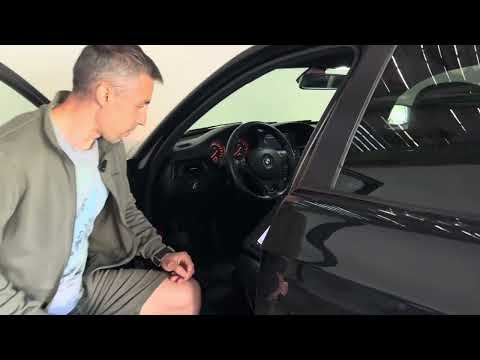
In this AUTOCHIP.LV workshop video, several BMW vehicles are featured, including BMW X5 models and a car from the E60 generation. The projects involve DPF-related mechanical work, EGR control modifications, Stage 1 ECU remapping and Deep Idle sound tuning. For one of the vehicles, the technician reports an output of approximately 350 hp and 700 Nm of torque.
Several BMW Projects at Different Stages
The video shows more than one vehicle undergoing work at the workshop. One BMW has already had its diesel particulate filter removed from the exhaust housing, while its catalytic converter has been retained.
The technician also introduces two BMW X5 vehicles scheduled for work involving the DPF, EGR and intake flaps. Performance tuning and Deep Idle sound calibration are also discussed.
It is important not to assume that every modification mentioned was completed on every vehicle. The video covers different cars and different stages of the work, from planned operations to completed software changes.
DPF Removal While Retaining the Catalytic Converter
One of the demonstrated operations is the physical removal of a diesel particulate filter. The technician specifically points out that the catalytic converter remains in place.
Although these components can be located close together or incorporated into a combined exhaust assembly, they perform different functions.
The DPF (Diesel Particulate Filter) captures soot and other solid particles from diesel exhaust gases. A catalytic converter, on the other hand, supports chemical reactions that reduce particular exhaust pollutants, depending on the converter type and exhaust aftertreatment design.
Retaining the catalytic converter therefore does not replace the particle filtration function of a removed DPF.
After removing the filter element, the planned mechanical work included welding, grinding and painting the exhaust housing. The video shows preparation for these operations, although not every stage of the mechanical work is documented individually.
Regulatory consideration: removing a factory-fitted DPF or disabling emissions-control equipment may breach vehicle inspection and public-road requirements. Keeping the catalytic converter does not, by itself, establish emissions compliance after DPF removal.
EGR and Intake Flaps: Understanding Their Functions
The BMW projects also involve discussion of EGR and intake flap control.
EGR stands for Exhaust Gas Recirculation. Under certain operating conditions, it redirects a controlled proportion of exhaust gas into the engine's intake system. This lowers peak combustion temperatures and helps reduce the formation of nitrogen oxides (NOx).
Intake swirl flaps, where fitted, influence airflow patterns within the intake manifold. They are used to support suitable air movement and combustion characteristics under particular engine operating conditions.
These systems are integrated into the engine management strategy, meaning that software modifications affecting their operation are different from changes made purely to increase power.
Towards the end of the video, the technician confirms that EGR control has been disabled in the software of one vehicle. Intake flap modifications are also mentioned among the planned jobs, but their completion is not individually confirmed for every BMW shown.
What Is Deep Idle on a BMW?
One of the main features demonstrated in this project is Deep Idle — a calibration designed to change the character of the engine's sound at idle.
The aim is to achieve a deeper and more pronounced engine note. Depending on the engine design and ECU capabilities, this can involve changes to the relevant engine management calibration.
Deep Idle is not the same as a Stage 1 performance remap. Stage 1 focuses on improving engine output, while Deep Idle is primarily intended to alter the acoustic character of the engine.
At the beginning of the video, the technician introduces a before-and-after sound comparison, including the original exhaust configuration and the changes made during the project. Later, he confirms that Deep Idle has been completed on one of the vehicles.
The final sound depends on more than ECU software alone. Exhaust configuration, engine design, catalytic converters, particulate filters and silencers can all influence the engine note.
Consequently, when both software and exhaust hardware have been changed, the audible difference cannot automatically be attributed entirely to Deep Idle. Different BMW engines may also respond differently to similar acoustic tuning objectives.
Stage 1 ECU Remapping: A Reported 350 HP and 700 Nm
In addition to the exhaust-related work and sound calibration, the AUTOCHIP.LV team completed ECU performance tuning on one of the BMW vehicles.
A Stage 1 remap generally involves optimising engine management parameters associated with torque demand, fuel injection, turbocharger control and other performance-related strategies. The exact changes depend on the engine and ECU.
At the end of the project, the technician reports 350 hp and 700 Nm of torque for the tuned vehicle.
He also explains the workshop's approach to performance testing. AUTOCHIP.LV uses a synchronised 4WD dynamometer and draws on dynamometer testing and reference measurements rather than relying solely on how a vehicle feels during road driving.
However, the video does not provide a complete individual before-and-after dyno report, original output figures or a detailed power curve for the specific car being discussed.
For that reason, 350 hp and 700 Nm should be understood as the technician's reported result, not as an independently verifiable measurement comparison presented in the video.
The figures should not be applied to every BMW X5 or E60, as the exact engine specifications of the individual vehicles are not stated.
Why Use a Synchronised 4WD Dynamometer?
An ECU remap can noticeably change the way a vehicle responds to throttle input and accelerates, but subjective impressions cannot establish its actual horsepower or torque output.
A dynamometer, commonly called a dyno, allows vehicle performance to be measured under controlled test conditions. When measurements are taken both before and after tuning, the results can be compared to assess the change in output.
For all-wheel-drive vehicles such as many BMW X5 models, suitable test equipment is particularly important. A synchronised 4WD dynamometer allows the driven axles to operate in a coordinated way during testing.
Dyno testing can also help reveal the shape of the power and torque curves across the engine's operating range, rather than focusing on a single peak figure.
Nevertheless, a dynamometer does not replace mechanical diagnostics or an assessment of engine operating parameters. Producing a high peak figure does not automatically establish long-term reliability.
Why Vehicle Condition Matters on Older BMW Diesels
The technician notes that one of the BMW vehicles is from approximately the 2006–2008 period. With vehicles of this age, mechanical condition is especially important when considering performance modifications.
The condition of the turbocharger, fuel injection system, charge-air system, cooling system and automatic transmission can all influence how reliably an engine performs under increased load.
Previous software modifications also deserve attention. A vehicle may have been remapped before its current owner purchased it, and the existing ECU calibration may no longer match the original factory version.
Sound-related modifications such as Deep Idle should not be used to disguise an underlying idle or combustion problem. If the engine is already running poorly, the cause needs to be investigated before further calibration changes are considered.
Final Overview of the BMW Projects
This AUTOCHIP.LV video provides a look at several BMW vehicles undergoing exhaust-related mechanical work and ECU software modifications.
On one vehicle, the DPF had been physically removed while the catalytic converter was retained. Work involving EGR and intake flaps was discussed for other BMW vehicles, including X5 models. In the completed stage of one project, the technician confirms EGR software deactivation, Deep Idle calibration and performance tuning, reporting 350 hp and 700 Nm.
Stage 1 tuning, Deep Idle sound modifications and emissions-system work should not be treated as interchangeable operations. Each has different technical objectives, requirements and implications for vehicle operation.
The accompanying video offers a closer look at the BMW exhaust work, engine sound comparison and the AUTOCHIP.LV approach to ECU programming and dynamometer-based performance evaluation.
Video related to this case
Watch the video for additional details about this job.
Related technical cases