BMW 525d Stage 3 turbo build — 420 hp dyno test and 392 hp final tune
Custom tuning a modified BMW 525d with a Stage 3 turbo. Initial dyno result of 420 hp and 771 Nm, followed by a 392 hp and 740 Nm final calibration.
 Chip tuning
ECU remapping
Custom ECU calibration
BMW 525d
Stage 3 turbo
Diesel performance tuning
Dyno testing
Turbocharger upgrade
Intercooler upgrade
Fuel injector upgrade
Torque management
High-performance diesel

Can a BMW 525d diesel engine produce more than 400 horsepower? With substantial hardware modifications, an upgraded turbocharger and a properly matched ECU calibration, such performance can be achievable.
At AUTOCHIP.LV, we worked on a heavily modified BMW 525d equipped with a Stage 3 turbocharger and several supporting engine upgrades. During dynamometer testing, one of the calibrations produced approximately 420 hp and 771 Nm of torque.
However, the highest result was not the final choice. After the initial test, the owner requested slightly less power, so a second ECU calibration was prepared. The final figures reported for the car were 392 hp and 740 Nm.
This project highlights both the performance potential of a modified diesel engine and the importance of matching ECU calibration to the installed hardware and the owner's requirements.
A heavily modified BMW 525d diesel engine
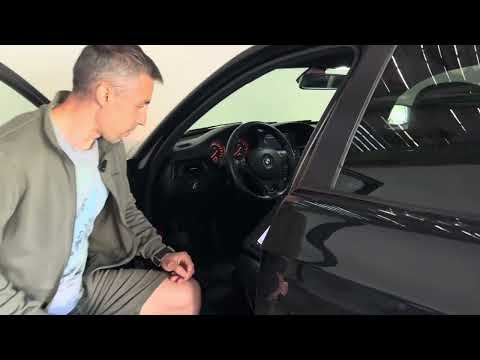
This BMW was not running a standard factory engine configuration. The technician described it as a 525d with a three-litre diesel engine and a single turbocharger. The precise engine code and model year were not established in the recording.
The car already had several important mechanical upgrades. These included a Stage 3 turbocharger, an upgraded intercooler and fuel injectors described as coming from a BMW 335 model.
Other component and sensor modifications were also mentioned, although their exact specifications were not provided.
These upgrades significantly change the engine's operating potential compared with its original configuration.
A higher-capacity turbocharger can provide the airflow required for increased performance, but airflow alone is not enough. The fuel system must also be capable of supplying the required amount of fuel, and the ECU must control the entire process appropriately.
An upgraded intercooler helps manage the temperature of compressed intake air, which becomes increasingly important when an engine is operated at higher loads.
All these systems need to work together. Simply installing performance components does not guarantee a particular power figure or reliable operation.
Why does a Stage 3 turbo require custom ECU tuning?
In this case, the Stage 3 designation refers to the upgraded turbocharger fitted to the vehicle. This is fundamentally different from a conventional Stage 1 remap performed on an otherwise standard engine.
Changing to a substantially different turbocharger alters the engine's boost characteristics and the operating range of the forced-induction system. The ECU calibration must account for these changes when managing boost pressure, fuel delivery and engine torque.
Upgraded injectors also require appropriate control. Incorrect injection calibration can affect combustion quality, soot production and thermal loading.
The intercooler, turbocharger and fuel system therefore need to be considered as parts of one complete engine configuration.
For a build of this type, applying an unchanged generic software file intended for a factory-specification vehicle would not be an appropriate substitute for custom calibration.
Individual ECU tuning makes it possible to adjust the performance target according to the actual hardware and the owner's preferences.
Initial dyno result: 420 hp and 771 Nm
During the tuning process, the BMW 525d was tested on a dynamometer. One of the tested calibrations produced the following reported figures:
- Power: approximately 420 hp.
- Torque: 771 Nm.
The technician compared this result with a reference figure of around 200 hp. However, the recording does not establish a separate baseline dyno measurement from before the mechanical modifications. The 200 hp figure should therefore not be treated as a documented initial measurement for this particular car.
Even without a verified original baseline, the 420 hp result demonstrates the substantial performance potential of the modified engine.
The torque figure was equally notable. At 771 Nm, the engine was producing a level of torque that places significant demands on the transmission and driveline components.
What happened during the dynamometer test?
During the high-output test, the vehicle moved noticeably on the dynamometer rollers. The technician described the BMW bouncing or shifting sideways relative to the rollers under load.
This highlights an important consideration when testing heavily modified vehicles: secure positioning, appropriate restraint and correct dynamometer procedures are essential.
Movement on a rolling-road dynamometer does not, by itself, identify the precise technical cause. Vehicle restraint, tyre behaviour, positioning and the way torque is transmitted to the rollers can all influence stability during a test.
The observation therefore should not be interpreted as a separate measurement of engine output or proof of a particular vehicle fault. It does, however, emphasise the importance of controlled testing conditions.
Why was the power reduced to 392 hp?
Following the impressive initial result, the owner asked for a slightly lower performance level.
Rather than keeping the highest-output calibration, the AUTOCHIP.LV team prepared a second ECU software version with reduced power and torque.
The resulting figures were reported as:
- Power: 392 hp.
- Torque: 740 Nm.
Compared with the previous 420 hp and 771 Nm setup, this represented a reduction of 28 hp and 31 Nm.
Despite the reduction, the final calibration still delivered almost 400 horsepower and a substantial 740 Nm of torque.
The decision demonstrates one of the advantages of custom ECU tuning. The highest possible result is not necessarily the output level an owner wants to retain.
At the same time, a lower peak power figure should not automatically be considered proof of mechanical safety or long-term reliability. Even at 392 hp, the modified engine and drivetrain remain subject to considerable loads.
Why torque matters as much as horsepower
Horsepower often receives the most attention in performance tuning discussions, but torque is especially important when evaluating the behaviour and mechanical demands of a powerful diesel engine.
The BMW's final reported calibration still produced 740 Nm.
Torque at this level places increased demands on components such as the gearbox, clutch or torque converter, driveshaft and differential.
The maximum torque figure is only one part of the picture. The engine speed at which torque is produced, how quickly it rises and how the ECU manages torque delivery can also affect drivetrain loading.
Two engines with the same peak torque may place different demands on their drivetrains depending on the shape of the torque curve.
The recording does not provide the transmission specification, details of any gearbox upgrades or long-term durability testing. Consequently, the result should be understood as an example of this particular modified BMW, not as proof that a standard 525d drivetrain can reliably withstand identical loads.
Can a standard BMW 525d produce the same power?
Not every BMW 525d has the same engine configuration. Different generations have used different engine designs, displacements, turbocharging arrangements and electronic control systems.
The vehicle featured in this project was described as having a three-litre diesel engine with a single turbocharger and substantial supporting modifications.
Its output should not be confused with what can be achieved through a software-only Stage 1 remap on a completely standard vehicle.
Planning a similar build requires identifying the exact engine variant, assessing its mechanical condition and selecting compatible components.
Once the hardware has been upgraded, the ECU calibration must be developed around that configuration and evaluated through appropriate diagnostic and performance testing.
A successful dyno result establishes performance under the conditions tested, but it does not demonstrate long-term engine or drivetrain durability. Ongoing mechanical inspection and maintenance remain particularly important for a highly modified vehicle.
Conclusion: a custom-tuned BMW 525d producing 392 hp
This BMW 525d project demonstrates the performance potential of a heavily upgraded diesel engine fitted with a Stage 3 turbocharger, improved intercooling and modified fuel delivery components.
One of the dynamometer tests produced approximately 420 hp and 771 Nm. However, at the owner's request, a second, less aggressive calibration was prepared, with reported figures of 392 hp and 740 Nm.
The lower-output version was the final choice for the vehicle.
The main lesson is that custom ECU tuning is not simply about achieving the highest possible horsepower figure. It is also about developing a calibration that matches the mechanical configuration and the performance level requested by the owner.
The accompanying video provides a closer look at the BMW 525d, its Stage 3 turbocharger setup, mechanical modifications and dynamometer testing.
Video related to this case
Watch the video for additional details about this job.
Related technical cases